Introduction
There’s something magical about slurping up a steaming bowl of laksa on a rainy afternoon. The creamy coconut broth, the springy noodles, and that perfect balance of spicy and savory flavors create an experience that goes beyond just eating. If you’ve ever tasted this Southeast Asian treasure at a restaurant and thought you could never recreate it at home, I’m here to tell you otherwise.
Making a laksa recipe at home might seem intimidating at first. The ingredient list can look long, and the layers of flavor might feel complex. But here’s the truth: with the right guidance and a bit of patience, you can craft a bowl of laksa that rivals any restaurant version. This guide will walk you through everything you need to know, from understanding what makes laksa special to mastering the cooking techniques that bring it all together.
What Makes Laksa So Special
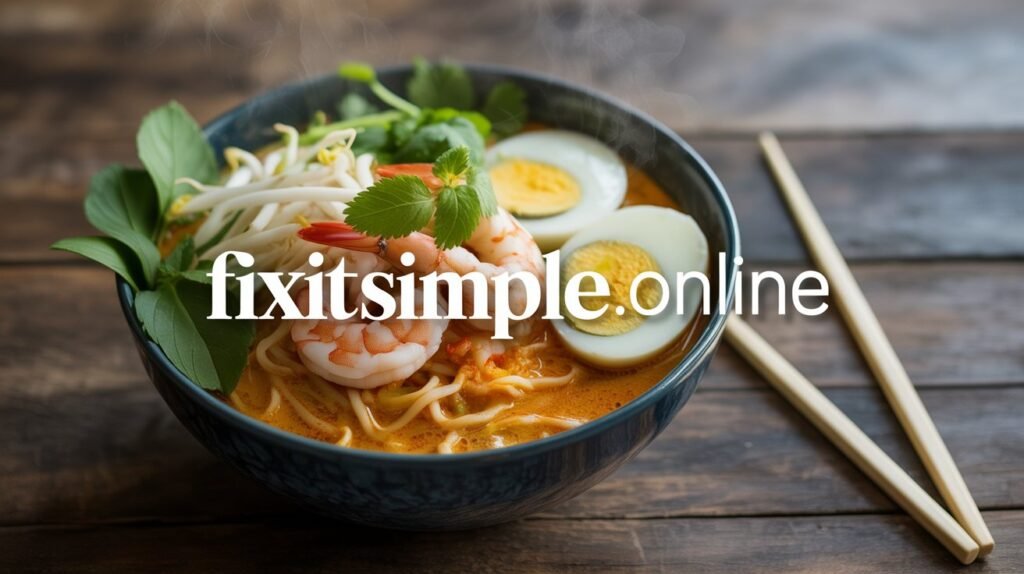
Laksa stands out in the world of noodle soups for good reason. This dish brings together influences from Chinese and Malay cuisines, creating something entirely unique. The foundation is a rich, aromatic broth that typically combines coconut milk with a complex spice paste.
You’ll find different versions across Southeast Asia. Some are curry based with that creamy coconut richness. Others lean toward a tangy, tamarind driven profile. Each region claims its own authentic version, and honestly, they’re all worth trying.
The beauty of laksa lies in its balance. You get creaminess from coconut milk, heat from chilies, depth from shrimp paste, and brightness from herbs. Every spoonful should tell a story of these flavors working together in harmony.
Essential Ingredients for Your Laksa Recipe
Let’s break down what you actually need to make laksa. The ingredient list might look lengthy, but most items are pantry staples in Asian cooking.
The Spice Paste Base
This is where the magic happens. Your spice paste forms the foundation of flavor.
You’ll need:
- Dried red chilies (5 to 8, depending on heat preference)
- Shallots (4 to 5 medium sized)
- Garlic (4 to 6 cloves)
- Fresh ginger (2 inch piece)
- Lemongrass (2 stalks, white parts only)
- Galangal (1 inch piece, if available)
- Candlenuts or macadamia nuts (3 to 4)
- Shrimp paste (1 tablespoon)
- Turmeric powder (1 teaspoon)
- Coriander powder (2 teaspoons)
Soak your dried chilies in hot water for 15 minutes before blending. This softens them and makes blending easier. Remove the seeds if you prefer less heat.
The Broth Components
Once your spice paste is ready, you’ll build the broth around it.
- Coconut milk (2 cans, full fat works best)
- Chicken or vegetable stock (4 cups)
- Fish sauce (2 to 3 tablespoons)
- Palm sugar or brown sugar (1 tablespoon)
- Tamarind paste (1 teaspoon, optional but recommended)
- Lime leaves (3 to 4, torn)
The coconut milk provides that signature creaminess. Don’t skimp on quality here. Full fat coconut milk gives you the richness that makes laksa so satisfying.
Noodles and Toppings
The noodles matter more than you might think. Traditional laksa uses thick rice noodles, but you have options.
Noodle choices:
- Rice vermicelli (most common)
- Rice stick noodles (thick)
- Egg noodles (less traditional but tasty)
- Combination of rice and egg noodles
Essential toppings:
- Shrimp (peeled and deveined)
- Fish cakes (sliced)
- Hard boiled eggs (halved)
- Bean sprouts (fresh)
- Tofu puffs (fried tofu)
- Fresh cilantro
- Vietnamese mint or laksa leaves
- Lime wedges
- Sambal (chili paste)
Step by Step Laksa Recipe Instructions
Now we get to the actual cooking. Take your time with each step. Rushing through the process means missing out on developing those deep flavors.
Making the Spice Paste
Start by preparing all your aromatics. Peel and roughly chop the shallots, garlic, ginger, and galangal. Cut your lemongrass into thin slices. Drain your soaked chilies.
Add everything to a blender or food processor. Blend until you get a smooth paste. You might need to add a tablespoon or two of water to help the blending process. Don’t add too much though. You want a thick paste, not a watery mixture.
The paste should look vibrant and smell intensely aromatic. If you can handle the fumes, give it a good sniff. That sharp, pungent aroma tells you you’re on the right track.
Cooking the Paste
Heat three tablespoons of neutral oil in a large pot over medium heat. Add your spice paste and cook it slowly. This step is crucial. You’re not just heating the paste. You’re actually cooking it to remove the raw flavors and develop complexity.
Stir constantly for about 8 to 10 minutes. The paste will darken slightly and the oil will start to separate. Your kitchen will smell amazing. The raw, sharp aroma transforms into something rich and inviting.
Building the Broth
Once your paste is properly cooked, pour in your stock. Stir everything together and bring it to a gentle simmer. Add the torn lime leaves at this point. Let this simmer for 15 minutes. This allows the flavors to meld.
Now add the coconut milk. Pour it in slowly while stirring. Bring everything back to a gentle simmer. Don’t let it boil hard. High heat can cause the coconut milk to separate and turn grainy.
Season your broth with fish sauce and palm sugar. Start with less than you think you need. You can always add more. Taste as you go. You’re looking for a balance between salty, sweet, and spicy.
Add the tamarind paste if using. This brings a subtle tanginess that lifts the entire dish. Simmer everything together for another 10 minutes.
Preparing Your Proteins and Toppings
While the broth simmers, prepare your proteins. If using shrimp, season them lightly with salt. You can poach them directly in the laksa broth during the last few minutes of cooking. This keeps them tender and infuses them with flavor.
Slice your fish cakes. Prepare your hard boiled eggs. Get your bean sprouts and tofu puffs ready. Having everything prepped makes assembly quick and easy.
Cooking the Noodles
Cook your noodles according to package directions. Drain them well. Rinse them quickly with cold water to stop the cooking. This prevents them from becoming mushy.
Divide the noodles among serving bowls. If you like, you can quickly blanch the noodles in hot water right before serving to warm them up again.
Final Assembly
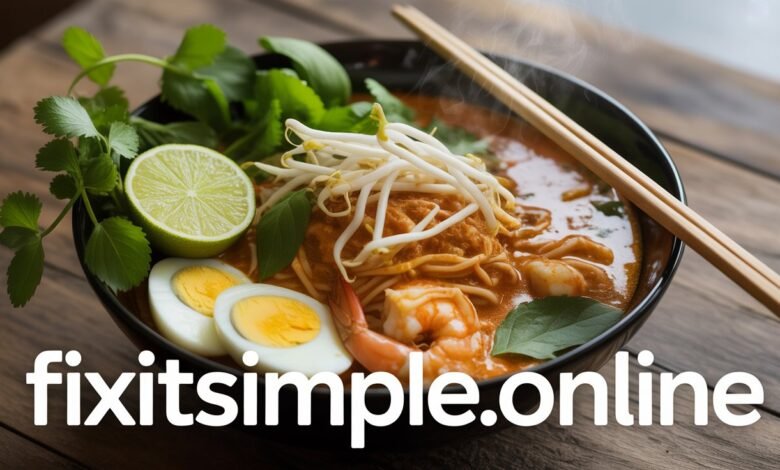
Here’s where your laksa recipe comes together. Arrange your shrimp, fish cakes, tofu puffs, and egg halves over the noodles in each bowl. Pour the hot, fragrant broth over everything. Make sure each bowl gets plenty of that rich liquid.
Top with fresh bean sprouts, herbs, and a lime wedge. Put sambal on the side so everyone can adjust the heat level to their liking.
Tips for the Best Homemade Laksa
I’ve learned a few things from making this laksa recipe multiple times. These tips will help you avoid common mistakes.
Toast your dried chilies: Before soaking them, toast the dried chilies briefly in a dry pan. This brings out their flavor and adds a subtle smokiness.
Don’t rush the paste: That 8 to 10 minutes of cooking the spice paste isn’t optional. This step develops the depth that separates good laksa from great laksa.
Use fresh ingredients: Fresh ginger, fresh lemongrass, and fresh garlic make a noticeable difference. Dried or powdered versions won’t give you the same vibrant flavor.
Adjust the heat carefully: Not everyone tolerates spice the same way. Start with fewer chilies and let people add sambal at the table.
Make extra paste: The spice paste freezes beautifully. Make a double batch and freeze half in ice cube trays. You’ll have the base for quick laksa whenever you want it.
Regional Variations You Should Know
Understanding different laksa styles helps you appreciate the dish more fully. It also lets you customize your laksa recipe to match your preferences.
Curry Laksa
This is probably the version most people picture. It features that rich, creamy coconut based broth. The curry laksa typically includes more curry powder in the spice paste. You’ll find this style popular in Malaysia and Singapore.
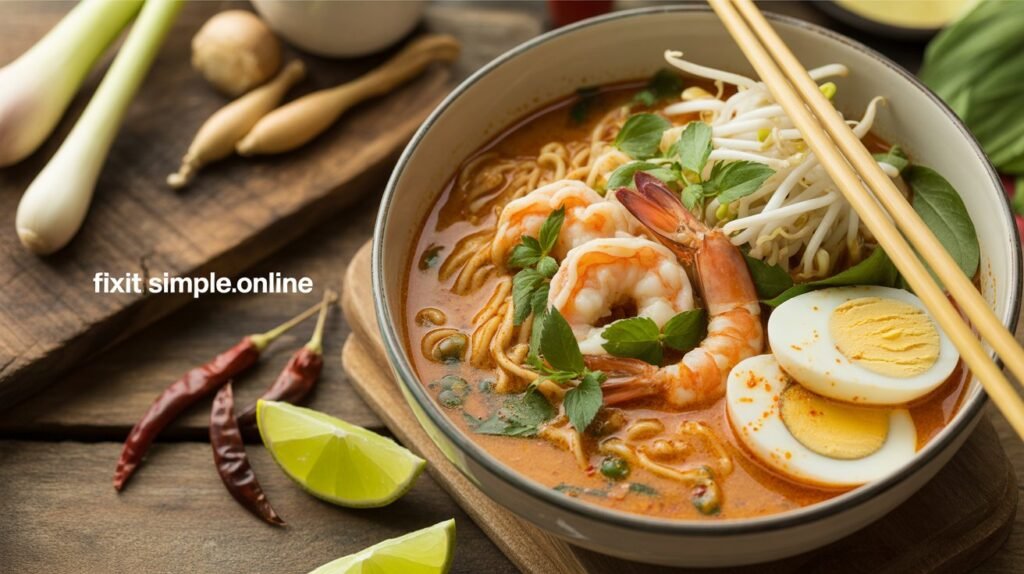
The broth has a beautiful orange color from the turmeric and curry spices. Toppings often include chicken, shrimp, tofu puffs, and cockles.
Asam Laksa
This version comes from Penang, Malaysia. Instead of coconut milk, asam laksa uses a fish based broth with tamarind. The result is tangy, spicy, and refreshingly different from curry laksa.
Asam laksa typically uses flaked mackerel or sardines. The toppings include pineapple, cucumber, onions, and mint. The flavor profile is more sour and herbal.
Katong Laksa
Originating from Singapore’s Katong area, this version features a thicker, more concentrated broth. The noodles are cut into shorter pieces so you can eat the whole thing with just a spoon.
Katong laksa tends to be sweeter and less spicy than other versions. It often includes cockles, shrimp, and fish cake.
Making Laksa Ahead of Time
One of the best things about this laksa recipe is how well it works for meal prep. You can prepare components ahead and assemble quickly when you’re ready to eat.
The spice paste keeps in the fridge for up to a week. Store it in an airtight container. For longer storage, freeze it for up to three months.
You can make the broth a day or two ahead. Store it in the fridge and reheat gently when needed. The flavors actually develop and improve overnight.
Cook noodles fresh when you’re ready to serve. Cooked noodles don’t store well and become mushy.
Prep your toppings and store them separately. This keeps everything fresh and maintains the right textures.
Common Mistakes to Avoid
Even experienced cooks can stumble when making laksa for the first time. Watch out for these common issues.
Boiling the coconut milk: High heat causes coconut milk to separate and become grainy. Always simmer gently once you’ve added the coconut milk.
Under cooking the spice paste: Raw aromatics taste sharp and unpleasant. Cook that paste until it’s fragrant and the oil separates.
Using low quality coconut milk: Thin, watery coconut milk won’t give you that rich, creamy broth. Invest in good quality, full fat coconut milk.
Overcooking the noodles: Mushy noodles ruin the texture of your laksa. Cook them just until tender and rinse with cold water to stop the cooking.
Forgetting to season: Taste your broth before serving. It needs enough salt (from fish sauce), sweetness, and heat. Balance is key.
Vegetarian and Vegan Adaptations
You can absolutely make a plant based version of this laksa recipe. A few simple swaps give you all the flavor without animal products.
Replace fish sauce with soy sauce or tamari. Add a bit of extra salt to compensate for the depth fish sauce provides. Use vegetable stock instead of chicken stock.
Skip the shrimp paste or look for vegetarian shrimp paste made from fermented soybeans. Some Asian markets carry this specialty item. If you can’t find it, add extra miso paste for that umami depth.
For protein, use firm tofu, tempeh, or mushrooms. Oyster mushrooms work particularly well. Their meaty texture holds up beautifully in the broth.
Keep all the aromatic vegetables and herbs. These provide most of the flavor in laksa anyway. Add extra vegetables like bok choy, snap peas, or baby corn.
Pairing and Serving Suggestions
Laksa is substantial enough to be a complete meal. The noodles, protein, and vegetables cover all your bases. However, a few accompaniments can enhance the experience.
Serve lime wedges on the side. That fresh citrus squeeze right before eating brightens everything. Have sambal or chili oil available for heat lovers.
Fried shallots add wonderful crunch and flavor. Sprinkle them over your laksa just before serving. You can buy these pre made or make them fresh.
Cold drinks work best with spicy laksa. Iced tea, coconut water, or a light beer all pair nicely. The cold beverage balances the heat.
If you want a side dish, keep it simple. Plain jasmine rice or a light cucumber salad work well. You don’t want to compete with the complex flavors in your laksa recipe.
Storage and Reheating Guidelines
Leftover laksa requires a bit of care to maintain quality. Store components separately when possible.
Keep the broth in an airtight container in the fridge for up to three days. Reheat it gently on the stove. Don’t microwave the coconut broth. It heats unevenly and can separate.
Store cooked noodles separately. Toss them with a tiny bit of oil to prevent sticking. They’ll keep for a day or two.
Proteins and toppings should be stored in their own containers. Fresh herbs don’t store well. Add these fresh when you reheat and serve.
To reheat, warm your broth on the stove over low heat. Dip the noodles in boiling water briefly to heat them. Assemble everything in a bowl and pour the hot broth over it. Add fresh toppings and herbs.
Conclusion
Making your own laksa recipe at home transforms you from someone who orders it at restaurants to someone who truly understands this incredible dish. Yes, the ingredient list is long. Yes, there are multiple steps. But none of them are particularly difficult, and the result is absolutely worth the effort.
You now have all the knowledge you need to create authentic, flavorful laksa in your own kitchen. Start with this basic recipe and make it your own. Adjust the spice level, play with different proteins, or try various regional styles. The beauty of cooking is making dishes that match your taste perfectly.
The next time that laksa craving hits, you won’t need to search for a restaurant or order delivery. You’ll know exactly how to satisfy it yourself. Have you tried making laksa at home before? What’s your favorite style of this amazing noodle soup?
Frequently Asked Questions
What is the difference between laksa and curry?
Laksa is a specific noodle soup dish that uses curry spices in its broth. Regular curry is typically a sauce served over rice. Laksa always includes noodles, coconut milk, and specific aromatics like lemongrass and galangal. The spice profile and serving style make them distinct dishes despite some shared ingredients.
Can I make laksa without coconut milk?
Yes, you can make asam laksa, which uses a fish and tamarind based broth instead of coconut milk. For curry laksa specifically, coconut milk is essential to the dish’s character. You could try coconut cream diluted with stock, but avoiding coconut milk entirely changes the fundamental nature of curry laksa.
How spicy is laksa supposed to be?
Spice levels vary widely by region and personal preference. Traditional laksa has noticeable heat but shouldn’t be painfully spicy. The coconut milk tempers the chilies. Start with fewer chilies in your paste and let people add sambal at the table to customize their heat level.
What noodles are best for laksa?
Thick rice vermicelli noodles are most traditional. Rice stick noodles also work well. Some versions use a combination of rice and egg noodles. The key is choosing noodles that hold up to the rich broth without becoming mushy. Avoid very thin angel hair style noodles.
Can I freeze laksa?
The spice paste and broth freeze well for up to three months. However, don’t freeze the dish after assembly. The noodles become mushy and the toppings lose their texture. Freeze components separately and assemble fresh laksa when you’re ready to eat.
What can I substitute for shrimp paste?
Shrimp paste provides essential umami and depth. For vegetarian versions, try miso paste or fermented bean paste. Soy sauce adds saltiness but not the same complexity. If avoiding seafood entirely, increase other aromatics and add a bit of nutritional yeast for depth.
Why is my laksa broth grainy?
Grainy broth usually means the coconut milk was heated too high or boiled too vigorously. Coconut milk proteins separate under high heat, creating that grainy texture. Always simmer gently after adding coconut milk. If it happens, you can’t reverse it, but the flavor will still be good.
How long does laksa paste last?
Homemade laksa paste keeps in the fridge for about one week in an airtight container. For longer storage, freeze it in ice cube trays or small portions for up to three months. Frozen paste maintains its flavor well and makes quick weeknight laksa possible.
What makes laksa different from pho?
Pho is Vietnamese with a clear, aromatic broth made from bones, star anise, and cinnamon. Laksa is Malaysian or Singaporean with a creamy, spicy coconut based broth. Pho uses thin rice noodles and is typically lighter. Laksa uses thicker noodles and has a richer, more complex spice profile.
Is laksa gluten free?
It can be if you use rice noodles and ensure all your sauces are gluten free. Check your fish sauce and any pre made pastes for wheat or gluten containing ingredients. Traditional laksa made with rice noodles and fresh ingredients is naturally gluten free, making it a great option for those avoiding gluten.
Also read fixitsimple.online