Wall Pilates: The Powerful, Transformative Workout You Can’t Miss 2026

Introduction
Imagine getting a full-body workout using nothing but your bodyweight and a flat wall. No gym membership. No fancy equipment. No commute. That’s exactly what wall pilates promises — and honestly, it delivers more than most people expect. If you’ve been curious about wall pilates but weren’t sure where to start or whether it’s actually worth your time, you’re in the right place.
Wall pilates is a modified version of traditional Pilates that uses a wall as a prop for support, resistance, and alignment. It brings the precision and mindfulness of classical Pilates into your living room, bedroom, or any space with a flat surface. And unlike a lot of home workout trends, this one has real staying power.
In this article, you’ll discover what wall pilates actually is, why it’s exploded in popularity, the science-backed benefits it offers, a beginner-friendly breakdown of core exercises, who it’s best suited for, and how to build a sustainable routine. Whether you’re brand new to fitness or a seasoned mover looking for something fresh, wall pilates has something to offer you.
What Is Wall Pilates, Exactly?
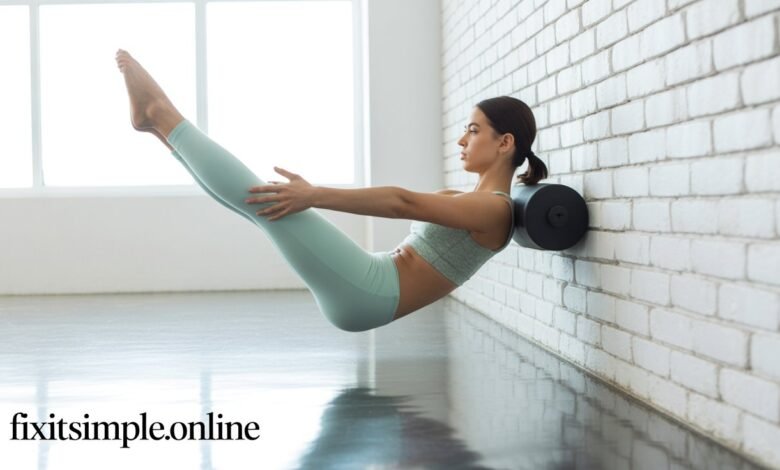
Wall pilates is a variation of traditional Pilates that incorporates a wall as a tool during exercises. The wall acts as a feedback surface, a resistance point, and a stability aid — all at once. It helps you find proper alignment, deepen your awareness of muscle engagement, and challenge your body in new ways without any equipment.
Traditional Pilates was developed by Joseph Pilates in the early twentieth century. His original method emphasized controlled movement, breath, and alignment. Wall pilates takes those same principles and adapts them for accessibility and practicality. The wall simply replaces some of the feedback you’d normally get from a reformer machine or a trained instructor.
What makes wall pilates stand out from other home workouts is its focus on quality over quantity. You’re not rushing through reps. You’re moving with intention. Every exercise in a wall pilates routine is designed to target specific muscles — particularly the core, glutes, inner thighs, and stabilizers — while protecting your joints.
Wall pilates became a massive trend after short-form workout videos flooded platforms like TikTok and YouTube around 2022 and 2023. Millions of people discovered that they could get an effective Pilates-style workout without ever leaving home. The simplicity of the concept made it instantly appealing.
Why Wall Pilates Has Taken the Fitness World by Storm
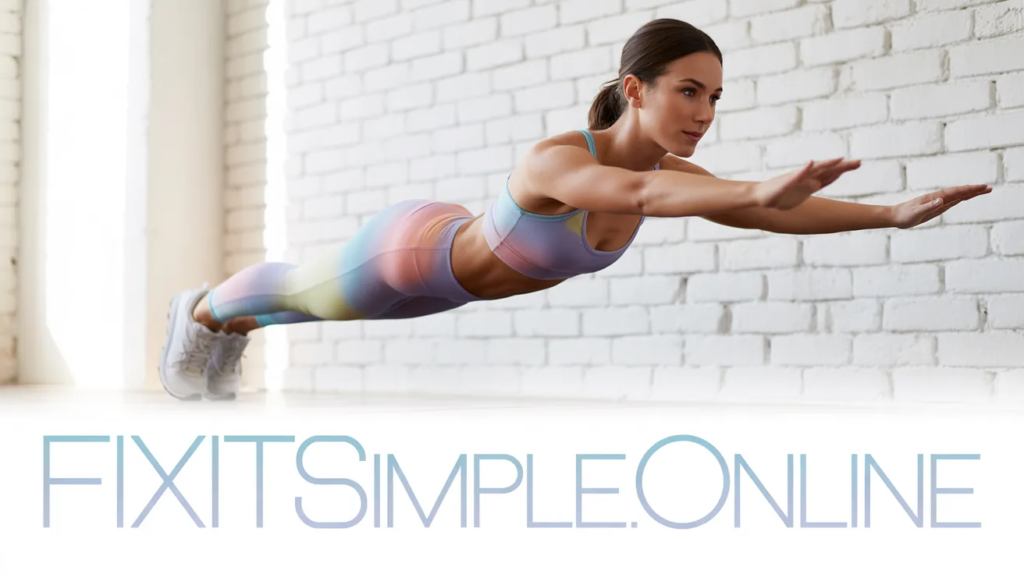
The rise of wall pilates isn’t just a social media trend. It reflects a genuine shift in how people want to exercise. Post-pandemic, more people are working out at home. More people are prioritizing low-impact, sustainable fitness. And more people are looking for routines that fit into a busy life without requiring a lot of space or gear.
Wall pilates checks every single one of those boxes. You need about two feet of floor space and a clear section of wall. That’s it. There’s no equipment to buy, no class to sign up for, and no schedule to stick to other than your own.
The accessibility factor is huge. Studies on exercise adherence consistently show that the biggest barrier to consistent workouts is convenience. When you remove the friction of getting to a gym, packing a bag, and finding a class time that works, you dramatically increase the chance that you’ll actually show up and do the work. Wall pilates reduces all of that friction to almost zero.
It’s also worth noting that wall pilates is genuinely effective. This isn’t just a pretty workout for social media. It builds real strength, improves flexibility, and creates body awareness that carries over into everyday movement. People who practice wall pilates regularly often report improvements in posture, reduced lower back pain, and a stronger sense of connection to their own body.
The Science-Backed Benefits of Wall Pilates
Improved Core Strength and Stability
The core is at the center of almost every wall pilates exercise. Not just the abs — the entire cylinder of muscles that wraps around your trunk, including the deep transverse abdominis, the pelvic floor, the obliques, and the muscles along your spine. Strengthening these muscles protects your spine. It improves your posture. It makes every other movement in your life easier and safer.
Research consistently shows that Pilates-based training significantly improves core strength and endurance. A 2015 study published in the Journal of Physical Therapy Science found that Pilates exercises enhanced trunk muscle strength and functional movement in participants after just four weeks. Wall pilates delivers similar benefits with the added advantage of tactile feedback from the wall, which helps you engage the right muscles more effectively.
Better Posture and Spinal Alignment
Poor posture is one of the most common complaints in the modern world. Hours of sitting, looking at screens, and carrying stress in your shoulders all contribute to rounded upper backs, forward head posture, and tight hip flexors. Wall pilates directly targets the muscles that counteract these patterns.
When you press your back against the wall during wall pilates exercises, you get immediate feedback about your spinal alignment. You can feel whether your lower back is arching too much. You can sense whether your shoulders are pulled away from the wall or hunched forward. This kind of real-time feedback is incredibly valuable, especially for people who are new to body awareness work.
Increased Flexibility and Mobility
Wall pilates moves you through a full range of motion with control. Over time, this builds functional flexibility — the kind that actually helps you in daily life. Hip mobility, hamstring flexibility, shoulder range of motion — all of these improve with regular wall pilates practice.
Unlike static stretching, which can feel passive and disconnected, wall pilates exercises move dynamically through ranges of motion while engaging your muscles. This combination of mobility and stability training is what physical therapists and sports scientists increasingly recommend for long-term joint health.
Low-Impact, Joint-Friendly Movement
One of the most compelling reasons to try wall pilates is how gentle it is on your body. There’s no jumping, no heavy loading, no high-impact stress on your knees, hips, or spine. This makes it ideal for people recovering from injury, older adults, pregnant or postpartum individuals, and anyone who simply doesn’t want to hammer their joints five days a week.
Low-impact does not mean low-effectiveness. Wall pilates can be genuinely challenging. You’ll feel your muscles working. You might even shake a little during some holds. But the movement is controlled and intentional in a way that protects rather than stresses your body.
Mind-Body Connection and Stress Reduction
Pilates has always emphasized the mind-body connection. Wall pilates is no different. The focused, deliberate nature of the practice naturally pulls your attention inward. You’re concentrating on how your muscles feel, how your breath is moving, and how your body is positioned. That kind of present-moment focus is essentially a form of moving meditation.
Multiple studies have linked regular Pilates practice to reduced stress and anxiety, improved mood, and better sleep quality. When you practice wall pilates consistently, you’re not just training your body — you’re training your nervous system to shift into a calmer, more focused state.
Core Wall Pilates Exercises for Beginners
1. Wall Squat Hold
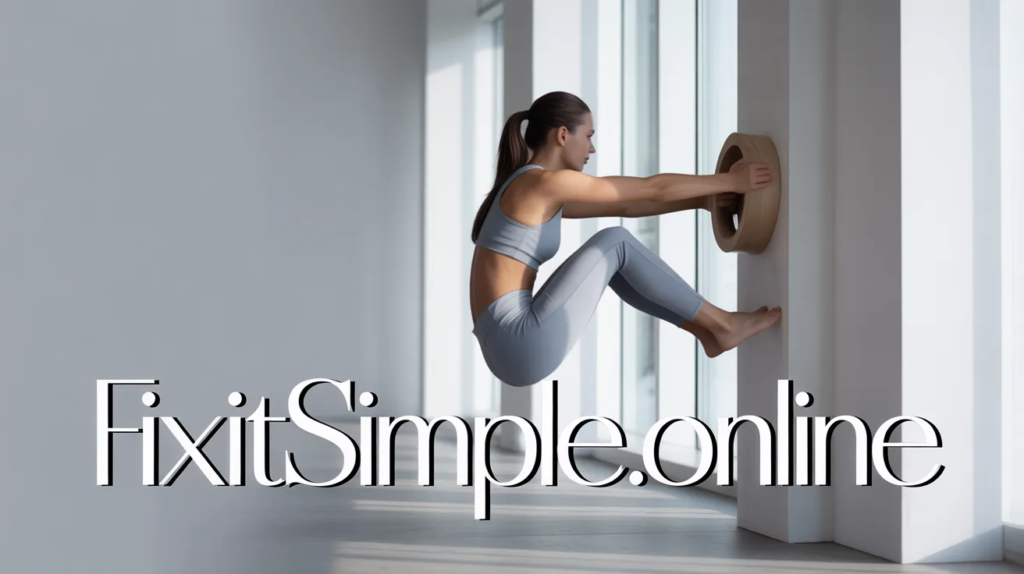
Stand with your back flat against the wall. Walk your feet out and slide down until your thighs are parallel to the floor. Hold this position for 30 to 60 seconds. Keep your core engaged and your lower back pressed into the wall. This exercise targets your quads, glutes, and core all at once.
2. Wall Pilates Roll Down
Stand with your back against the wall and your feet a few inches away from the base. Slowly peel your spine away from the wall, vertebra by vertebra, until your hands reach toward the floor. Pause, then roll back up the same way. This is a beautiful exercise for spinal mobility and hamstring flexibility.
3. Wall Bridge
Lie on your back with your feet flat on the wall at about a 90-degree angle. Press through your feet and lift your hips off the floor, creating a straight line from your shoulders to your knees. Hold briefly at the top, then lower with control. This targets the glutes, hamstrings, and lower core.
4. Wall Leg Circles
Lie on your back and place one foot flat on the wall. Extend the other leg up toward the ceiling. Trace controlled circles with that extended leg, keeping your pelvis completely still. This is a classic Pilates leg circle adapted for wall support. It works hip mobility and core stability beautifully.
5. Wall Pilates Single Leg Press
Stand sideways next to the wall. Place your inner hand on the wall for light support. Lift your outer leg and press your foot forward, to the side, and back in slow, controlled sequences. This challenges your hip stabilizers, glutes, and balance without any equipment.
6. Wall Chest Opener
Stand facing away from the wall. Place both palms flat on the wall behind you at shoulder height. Gently press your chest forward and lift your chin slightly, creating an opening across the chest and front of the shoulders. Hold for 20 to 30 seconds. This is perfect for counteracting the forward rounding that comes from desk work.
Who Should Try Wall Pilates?
Honestly, almost anyone can benefit from wall pilates. But it’s particularly well-suited for a few groups:
- Beginners to fitness — The wall provides support and feedback that makes it easier to learn proper form without feeling lost.
- People with chronic low back pain — The core strengthening and spinal alignment focus in wall pilates is often recommended by physical therapists.
- Older adults — Low impact, gentle on joints, and highly effective for maintaining mobility and balance.
- Pregnant or postpartum individuals — Many wall pilates exercises are safe during and after pregnancy, though always consult your healthcare provider first.
- Athletes — Wall pilates builds the stability, flexibility, and body awareness that enhance performance in almost every sport.
- Anyone stuck at home — No equipment, minimal space, and zero commute make this the ultimate home workout option.
I’d also say wall pilates is perfect for people who’ve tried high-intensity workouts before and burned out. The pace is sustainable. It doesn’t destroy you. You leave a session feeling better than when you started — and that’s the kind of workout you’ll actually keep coming back to.
How to Build a Wall Pilates Routine That Sticks
Starting is easy. Building a consistent wall pilates habit takes a bit more intention. Here are some practical tips:
Start with three days a week. Give your body time to adapt. Three sessions of 20 to 30 minutes each is plenty when you’re beginning. You can add more as it becomes a habit.
Follow a structured progression. Begin with foundational exercises like the wall squat hold and wall bridge. Add complexity gradually. Trying advanced variations too soon leads to frustration and poor form.
Pair it with a morning ritual. I find wall pilates works beautifully as a morning routine. It wakes your body up gently, sets a focused tone for the day, and doesn’t require you to have any equipment ready to go.
Use free videos as a guide. Platforms like YouTube have hundreds of free wall pilates routines at every level. Following along with a video makes it much easier to stay on pace and maintain proper form.
Track how you feel, not just what you do. Instead of only counting workouts, pay attention to how your body feels over time. Improved posture, less back tension, and more ease in daily movement are all signs that your wall pilates practice is working.
Common Mistakes to Avoid in Wall Pilates
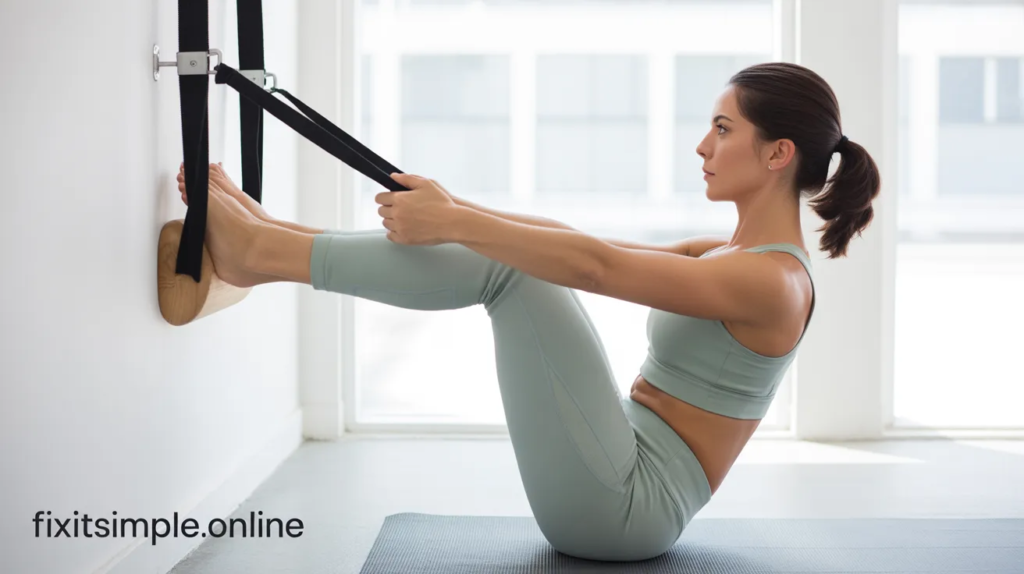
Even with simple exercises, a few common mistakes can limit your results or lead to discomfort:
- Rushing through reps. Wall pilates is about control. Slow down and feel every movement.
- Holding your breath. Breath is fundamental to Pilates. Exhale on exertion and inhale on the release.
- Allowing your lower back to arch away from the wall. Keep it neutral or gently pressed in during floor and wall exercises.
- Skipping the warm-up. Even five minutes of gentle movement before your session makes a difference in how your body responds.
- Expecting overnight results. Wall pilates builds strength and flexibility progressively. Give it four to six weeks of consistent practice before judging the results.
Conclusion
Wall pilates is one of those rare fitness practices that’s genuinely accessible, genuinely effective, and genuinely enjoyable — and that combination is hard to find. It meets you where you are. It works with your body rather than against it. It fits into your real life without demanding a huge time or financial commitment.
From improved core strength and better posture to reduced stress and greater flexibility, the benefits of wall pilates are wide-ranging and well-supported. Whether you’re just getting started on your fitness journey or looking to add something intentional and grounding to your existing routine, wall pilates is a practice worth exploring.
So here’s a simple challenge for you: try one wall pilates session this week. Even 15 minutes. See how your body feels afterward. Chances are, you’ll be coming back for more. And if you found this guide helpful, share it with someone who’s been looking for a simple, sustainable way to move their body every day.
Frequently Asked Questions About Wall Pilates
1. What is wall pilates and how does it differ from regular Pilates? Wall pilates uses a wall as a support and resistance tool during Pilates-style exercises. Regular Pilates often uses specialized equipment like a reformer or just a mat. Wall pilates is more accessible because it requires no equipment other than a flat wall and a small amount of floor space.
2. Is wall pilates effective for weight loss? Wall pilates can support weight loss as part of a balanced lifestyle. It builds lean muscle, which increases your resting metabolism. It also reduces stress, which can help manage cortisol-driven weight gain. It’s not a high-calorie burner on its own, but it complements other healthy habits very effectively.
3. How often should you do wall pilates? Three to five times per week is ideal for most people. Beginners should start with three sessions and build from there. Because wall pilates is low-impact, your body recovers faster than it would from high-intensity training, making more frequent sessions very manageable.
4. Can you do wall pilates if you have back pain? Many people with chronic back pain find wall pilates helpful because it strengthens the core and improves spinal alignment. However, always consult a doctor or physical therapist before starting any new exercise program if you have an existing condition.
5. Do you need any special equipment for wall pilates? No. All you need is a flat, clear wall and enough floor space to lie down. A yoga mat makes floor exercises more comfortable, but even that is optional. No weights, bands, or machines are required.
6. Is wall pilates good for beginners? Wall pilates is excellent for beginners. The wall provides stability and alignment feedback that makes it easier to learn correct form. The exercises can be modified to any fitness level, and the low-impact nature means there’s very little risk of injury when starting out.
7. How long does it take to see results from wall pilates? Most people notice improvements in posture and body awareness within two to three weeks. Significant strength and flexibility gains typically appear after four to six weeks of consistent practice. Results vary depending on frequency, effort, and individual starting point.
8. Can pregnant women do wall pilates? Many wall pilates exercises are pregnancy-safe, especially in the first and second trimesters. However, every pregnancy is different. Always get clearance from your obstetrician or midwife before starting or continuing any workout program during pregnancy.
9. Is wall pilates suitable for older adults? Absolutely. Wall pilates is one of the best fitness options for older adults because it’s low-impact, improves balance, strengthens stabilizing muscles, and enhances flexibility — all of which become increasingly important with age. It can also be adapted for limited mobility.
10. Can wall pilates replace a gym workout? For many people, wall pilates can serve as a complete and effective fitness routine on its own. If your goals are strength, mobility, posture, stress reduction, and overall functional fitness, wall pilates delivers all of that. If your primary goal is building significant muscle mass or sport-specific conditioning, you might want to combine it with other training methods.
Also Read: Fixitsimple.online
| Author: Johan Harwen |
| E-mail: johanharwen314@gmail.com |
| Bio: Johan Harwen is a passionate tourist who has explored countless destinations across the globe. With an eye for hidden gems and local cultures, he turns every journey into an unforgettable story worth sharing. |